
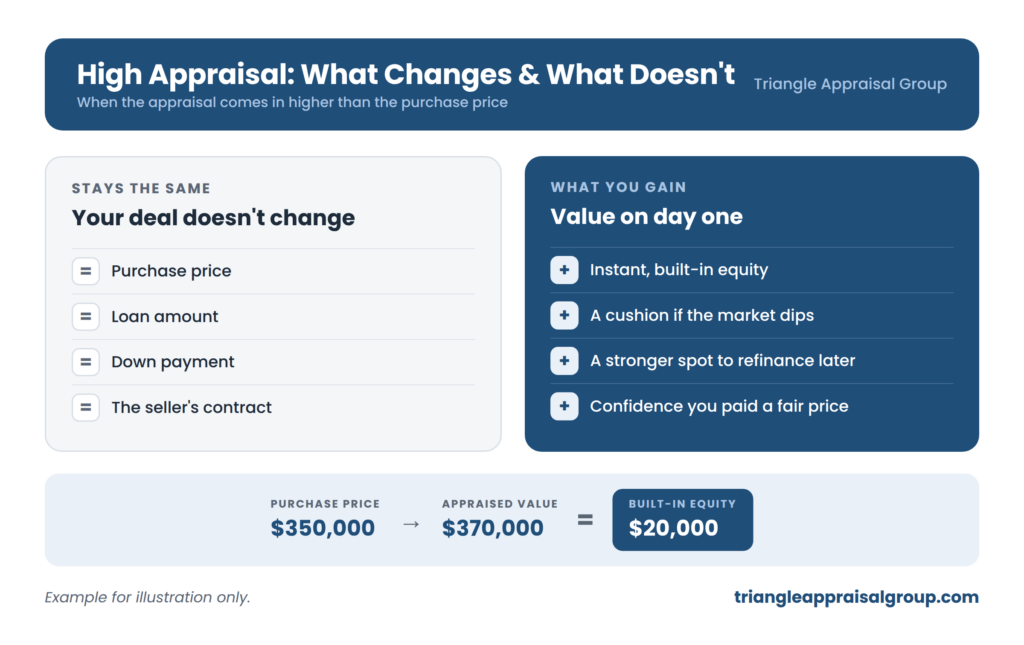
An appraisal higher than the purchase price is good news for the buyer. It means you’re paying less than the home is worth, so you start out with instant equity. Your sale price, your loan amount, and the seller’s contract all stay the same.
Here at Triangle Appraisal Group, we see this happen across North Carolina, from Charlotte to the Triad to the Triangle. Let’s walk through what a high appraisal really means for your equity, your loan, and your closing.
What Happens If the Appraisal Is Higher Than the Offer?
After the seller accepts an offer, the buyer’s lender orders an appraisal to confirm the home is worth at least the purchase price. The buyer usually pays for it. If the appraisal comes back higher than the agreed price, nothing about the deal changes:
- The purchase price stays the same. You pay what you agreed to pay.
- The loan amount stays the same. It’s based on the purchase price, not the higher value.
- The closing moves forward as planned.

The difference between the appraised value and your price is your built-in equity from day one.
Can the Seller Back Out If the Appraisal Is Higher?
In most cases, no. Once both sides sign the purchase agreement, the seller is bound by the contract. A high appraisal doesn’t give the seller a reason to cancel or raise the price. As always, check with your agent or attorney about the details of your own contract.
TAG Tip: The lender is the appraiser’s client, and federal rules require the lender to give the buyer a copy of the appraisal. The seller isn’t entitled to a copy, so they may never see the number.
What Does a High Appraisal Mean for Your Equity?
Equity is the difference between what your home is worth and what you owe. If you buy a home for $350,000 and it appraises for $370,000, you start with about $20,000 more equity than you paid for.
A few things to know:
- It’s equity on paper. You’ll only cash it in when you sell or refinance.
- You usually can’t borrow against it right away. Most lenders have waiting periods before you can do a cash-out refinance.
- It gives you a cushion. If the market dips, you have extra room before you’d owe more than the home is worth.
What If My FHA Appraisal is Higher Than the Purchase Price?
If an FHA appraisal comes in above the purchase price, your loan isn’t affected. The lender bases your loan on the lower of the appraised value or the purchase price, so your loan amount and down payment stay the same.
TAG Tip: FHA appraisals follow the same valuation standards as conventional appraisals, plus a few extras. The appraiser also checks that the home meets HUD’s Minimum Property Requirements for health and safety, like working utilities, safe stairs, and no peeling paint in older homes.
Does a High Appraisal Help You Avoid PMI?
Not at closing. Because your loan is based on the lower of the price or the appraised value, a high appraisal won’t lower your down payment percentage or remove private mortgage insurance (PMI) when you buy.
Later, it’s a different story. If your home’s value keeps rising, a new appraisal may help you remove PMI sooner on a conventional loan. Learn how in Home Appraisal to Remove PMI.
Is It Good to Have a High Appraisal?
Our short answer is yes! For buyers, an appraisal above the purchase price can be a golden ticket:
- Built-in equity
- A smoother path to loan approval
- A stronger position when you sell or refinance later
- Confidence that you paid a fair price

For sellers: a much higher appraisal can be a sign the home was priced too low. If you’re getting ready to sell, a pre-listing appraisal helps you price with confidence from the start, so you don’t leave money on the table.
Curious about the opposite situation? What Happens If the Appraisal Is Lower Than the Offer.
FAQs
Will my loan amount go up if the appraisal is higher?
No. Your loan is based on the lower of the purchase price or the appraised value, so it stays the same.
Can I use my equity right away?
Usually not. Most lenders have waiting periods before you can do a cash-out refinance, so think of it as long-term value.
Will a high appraisal raise my property taxes?
No. Your county sets your tax value through its own assessment, not your purchase appraisal. Here’s how the two differ: Assessed Value vs. Appraised Value.
Does the seller get a copy of the appraisal?
Not usually. The lender orders the appraisal and must give the buyer a copy, but the seller isn’t entitled to one.
What if I'm refinancing and the appraisal comes in higher than what I paid?
That’s great news. A higher value lowers your loan-to-value ratio, which can help you qualify for a better rate, remove PMI, or take cash out. Learn more about our refinance appraisals.
Buying, selling, or refinancing in North Carolina? Contact the TAG team for a fast, accurate appraisal, with reports finalized 3–5 business days after inspection.

Connect with Rachel Mann on LinkedIn:
Thanks for reading! We love sharing insights from the TAG team, and we’re always looking to connect with others who are passionate about real estate, marketing, and community.
Have thoughts to share or want to collaborate on a future post? Let’s talk!