Most buyers and sellers assume that home prices remain consistent within a city. In Johnston County, that’s rarely the case. Given the nuanced locations of its specific areas and rapid population growth, value ranges can be wide.
We recently sat down with Johnston County Commissioner and Realtor April Stephens to discuss the local real estate landscape and how home values can shift over short distances, making local expertise essential for accurate pricing.
So, let’s break it down.
Why "Same City" Doesn't Mean Same Value
In Johnston County, a mailing address doesn’t always reflect true market value.
As April pointed out, a home can sit in a desirable area but carry a less recognizable city name:
“You can have a home with a Selma address that’s actually closer to Clayton and major highways, but if someone doesn’t understand that local nuance, it may not be valued correctly.”
That lack of local understanding alone can create a $25K–$50K difference in value.
Moreover, while some central areas feel more consistent, the outskirts and even pockets within the same area can tell a completely different story.
Across Johnston County, values can range anywhere from $30K to $1.4 million, depending on location-specific factors. This makes city-level averages misleading and online estimates unreliable.
The key takeaway from Stephens’ insight?
“In a location with varying local factors, real estate must not be priced by zip code, but by the context each home comes with.”
Another important factor in Johnston County is how quickly value can shift, even on the same road. These changes come down to local nuance and buyer demand:
“It doesn’t take much distance to change value. Just a shift in location, demand, or proximity can create a completely different market.”
Major drivers of desirability in Johnston County include:
- Proximity to Wake County
- Buyer demand
- Access to highways and infrastructure
And these shifts can happen faster than most people expect:
“You can be on the same road and cross into a completely different market in under two miles.”
So while Johnston County is one county on paper, in practice, it’s made up of many distinct micro-markets.
TAG Tip: When setting a list price, it can make sense to order a pre-listing appraisal to ensure accuracy. You can read more about our pre-listing services here.
How Rapid Growth Is Changing Home Values
Johnston County has long been known for its agricultural roots, but it’s only recently gained attention for everything else it offers:
“We’ve always had what people are looking for in Johnston County…it’s just now getting the attention.”
With its location between the mountains and the coast, Johnston County offers a balanced lifestyle, with cities like Benson and Smithfield. Especially appealing to buyers seeking more space post-pandemic.
As remote work remains a steady part of daily life, with about 28% of work days now being conducted from home, according to Gable. Johnston County has become even more attractive compared to neighboring Wake County.
“With more people coming out of Wake County, Johnston County has become a place where buyers can get more space, more value, and still stay connected to everything the Triangle has to offer.”
So how is the county keeping up?
From an infrastructure standpoint:
“The board is working proactively on infrastructure and schools to manage the growth. Recent DOT infrastructure improvements, such as the 540 bypass, are providing relief in commute times, making the county more desirable for buyers.”
And from a housing perspective, Johnston County is beginning to fill a long-standing gap in inventory:
“The county is seeing a ‘big luxury boom’ as builders from Wake County introduce ‘affordable luxury’ into the market, with growth concentrated in the $600,000 to $1 million price point. This is an area that previously lacked housing stock, catering to current homeowners ready to move up while staying in Johnston County.”
Johnston County isn’t just seeing prices rise. It’s experiencing a real shift in value driven by demand, development, and changing buyer needs. Yay JoCo!
Why Local Knowledge Makes A Difference in Appraisals
With all of this in mind, how do you think an out-of-town appraiser or an automated valuation model (AVM) would perform in Johnston County?
Probably not very well.
Out-of-area appraisers can easily miss micro-markets, growth corridors, and shifting buyer demand trends:
“They (Johnston County officials) identified key growth corridors like Flowers Plantation, the Cleveland-McGee area near Wake County, and the I-95 corridor in Selma and Pine Level. These areas are seeing significant residential and commercial development, while also noting that some locations are perfectly poised for new product but haven’t seen it yet, where you almost feel like you’re pioneering value in those spaces.”
Accurate valuation in a market like this requires:
- Context
- Experience
- Deep local insight

TAG Tip: Triangle Appraisal Group has been serving the Triangle and surrounding areas since 2008. Learn more about us here.
Johnston County Pricing Explained
Johnston County is full of opportunity. And with that opportunity comes complexity. Pricing a home here isn’t just about square footage or zip code; it’s about understanding the why behind the value.
We really enjoyed this conversation with April Stephens and appreciate her taking the time to share her perspective on Johnston County’s growth and development!
When asked to spotlight a local business, April recommended The Station in downtown Clayton: a revitalized historic building that now serves as a true community hub. With a mix of local food, coffee, small shops, and even a hidden speakeasy tucked into former jail cells, it’s a great example of how Johnston County is blending its history with new energy and growth!
And in many ways, that’s exactly what’s happening across the county as a whole.
Thanks for reading!
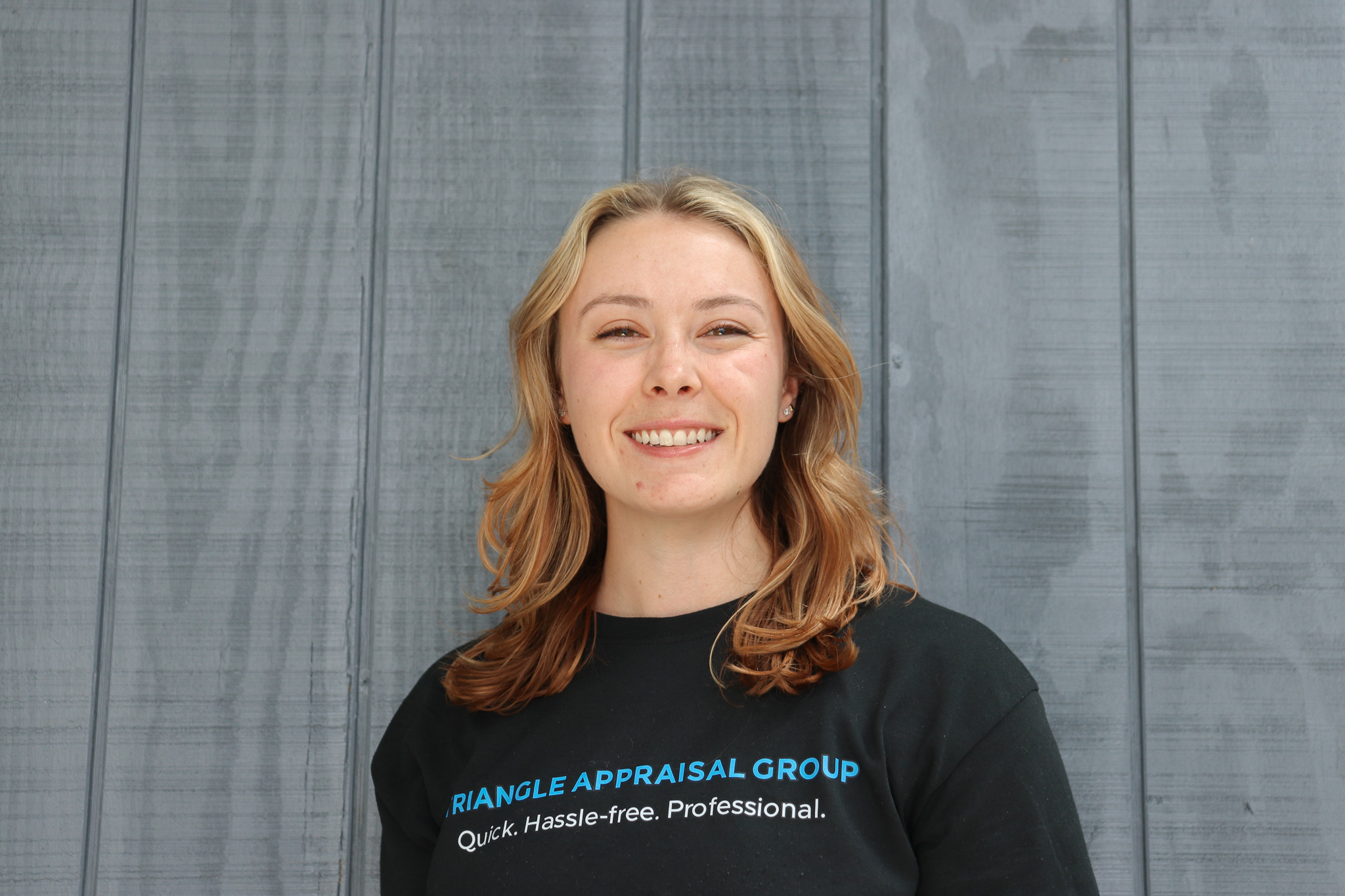
Connect with Rachel Mann on LinkedIn:
Thanks for reading! We love sharing insights from the TAG team, and we’re always looking to connect with others who are passionate about real estate, marketing, and community.
Have thoughts to share or want to collaborate on a future post? Let’s talk!