ADUs are popping up all over North Carolina, especially in cities like Durham and Charlotte, where updated development rules have made them easier to build. And when it comes time to appraise or list a home with one, the same question always comes up: how much does an ADU increase property value?
The honest answer is that there isn’t one magic number. An ADU can add real value, but how much depends on where the home is, whether the unit is permitted, and how the local market treats it.
At TAG, we look at these properties every week, so we want to walk you through how appraisers actually think about them and what that means for homeowners and Realtors before a home hits the market.
What is an ADU
An ADU, or accessory dwelling unit, is basically a second apartment on the same lot as the main home.
The keyword is apartment.
To count as a true ADU, the space has to have a functional kitchen. If there’s no working kitchen, it isn’t an ADU, it’s just extra living space.
ADUs come in a lot of shapes:
- A detached backyard cottage or guest house
- A converted poolhouse
- A finished loft above a garage
- An in-law suite
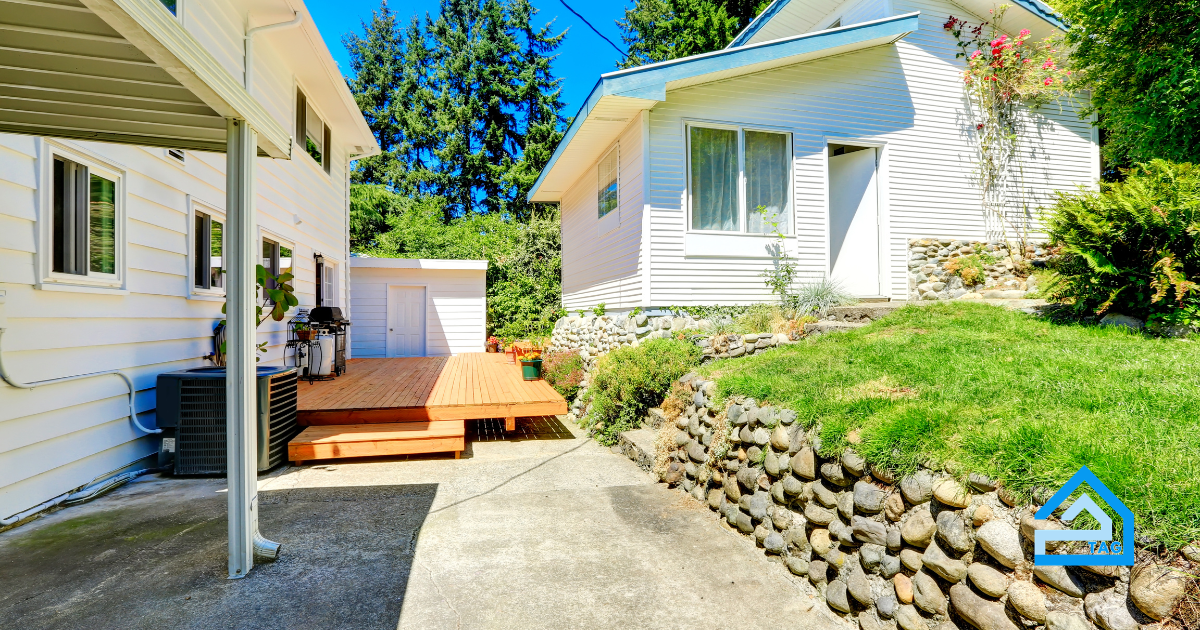
We see families use them in all kinds of ways. Most often for multigenerational living, like a granny pod for aging parents or a guest house. Some homeowners even rent theirs out for extra income. Just remember that in North Carolina, the rules for what you can build vary a lot from one city to the next.
How Appraisers Value an ADU
Here’s the part that surprises a lot of people. In an ADU appraisal, the unit isn’t counted as part of the main home’s living space. Appraisers value the main house first, and then treat everything else on the property as an amenity. This is the same way we’d treat a pool, a large workshop, or a finished basement.
That means an ADU is rarely a dollar-for-dollar investment. If you spend $150,000 building one, that doesn’t mean the home’s appraised value jumps by $150,000. The ADU adds value as a desirable feature, not as added square footage on the main house.
When it comes to size, there’s a limit worth knowing and our COO puts it plainly:
“Under most North Carolina development ordinances, an ADU can’t exceed 50% of the main home’s gross living area — so your main house sets the ceiling on how big the ADU can be.” — Nathan Jordan, COO, Triangle Appraisal Group
When we do put a value on that amenity, we usually lean on one or both of these approaches:
Sales Comparison Approach — finding comparable homes that also have an ADU. This can be tricky in areas where very few homes have one.
Income Approach — factoring in the rental income the unit could bring in, when the market supports it.
Not every ADU is valued the same, either. Size, finish level, a separate entrance, and independent utilities all play a role in how much that amenity is worth.
So, How Much Does an ADU Increase Property Value?
There’s no single number, but a well-built, permitted ADU tends to add value in three ways:
- As a sought-after amenity that makes the property more attractive
- Through rental income potential, especially in high-demand rental markets
- By widening the buyer pool: multigenerational families, investors, and house-hackers all take notice
But here’s the honest part: whether an ADU makes financial sense depends heavily on the market. ADUs pay off in high-demand, higher-priced areas (think places like Durham and Charlotte) because that’s where investors and buyers can get the strongest return. In lower-priced markets like Greensboro and Winston-Salem, the numbers usually don’t work as well, so you simply don’t see them built as often.
Why the difference? Investors want the highest possible return, and that return shows up in the markets where home prices and rents are already strong.
ADU Value by Market: Durham, Charlotte, Raleigh, and the Triad
Durham — Durham’s Unified Development Ordinance has made ADUs more common. More ADUs means more comparable sales and more reliable appraisals.
Charlotte — Similar momentum, plus strong investor and multigenerational buyer demand. See Charlotte’s Unified Development Ordinance for the local rules.
Raleigh — More restrictive zoning and fewer permitted ADUs, which means fewer comps and a harder appraisal.
Triad (Greensboro/Winston-Salem) — Lower price points mean weaker returns, so ADUs are rare here.
The rule of thumb we share with clients: a permitted, well-built ADU in a high-demand NC market can meaningfully increase value. But in a lower-priced area, or when it’s unpermitted, it may add very little.
TAG Tip: More on these markets, straight from local real estate pros we interviewed: Durham’s housing story and Charlotte’s investor market.
What to Know Before Listing a Home with an ADU
Whether you’re a homeowner or a Realtor, a little homework up front prevents pricing surprises later:
- Verify permit status before marketing the ADU as a feature.
- Confirm the separate entrance, utilities, and address — these affect how a lender treats the
- Understand how the lender will classify the home. Single-family versus multi-family can change the loan type.
- Consider ordering a private appraisal before listing, so you know the real number ahead of time.
FAQ's
How much does an ADU increase property value?
There’s no fixed number. An ADU is valued as an amenity on top of the main home, not as added living space, so it’s rarely a dollar-for-dollar return. The amount depends on the market, the permit status, and the size and finish of the unit.
Does an ADU need a kitchen to count?
Yes. A true ADU has to have a functional kitchen. Without one, the space is considered additional living area rather than a separate dwelling unit.
Do appraisers count ADU rental income toward value?
They can, through the income approach. But only when the unit is permitted and there’s market data to support it. In markets with strong rental demand, that income can add meaningful value.
Are ADUs easier to build in Durham and Charlotte than in Raleigh or the Triad?
Generally, yes. Durham and Charlotte have more ADU-friendly development ordinances and stronger demand, so the numbers work better. Raleigh has more restrictive zoning, and lower-priced areas like the Triad often don’t offer enough return to make building one worthwhile.
Should I get an appraisal before listing a home with an ADU?
It’s a smart move. A pre-listing appraisal from a team that understands ADUs gives you an accurate value and helps you avoid pricing surprises once the home is on the market.

Connect with Rachel Mann on LinkedIn:
Thanks for reading! We love sharing insights from the TAG team, and we’re always looking to connect with others who are passionate about real estate, marketing, and community.
Have thoughts to share or want to collaborate on a future post? Let’s talk!